

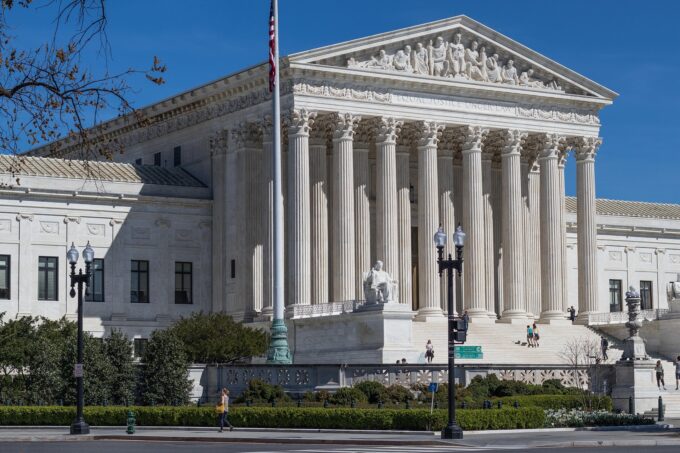
Well, the moment we have all been waiting for since November 5 has finally arrived. Can we stop holding our breath now?
SCOTUS issued their opinion on the IEEPA tariffs
In the 170-page document , it covers the Supreme Court opinion addressing whether the International Emergency Economic Powers Act (IEEPA) authorizes the President to impose tariffs during peacetime and declare national emergencies.
Here are the main takeaways:
- What the case was about:
The lawsuits challenged President Trump’s use of IEEPA to impose tariffs during two declared national emergencies — one involving drug trafficking and another related to trade deficits. - What the Court decided:
In a 6–3 ruling, the Supreme Court said IEEPA does not give the President the authority to impose tariffs. One case (No. 24–1287) was thrown out for lack of jurisdiction, while the other (No. 25–250) was upheld. - The majority’s reasoning:
- The Court said that the power to “regulate importation” under IEEPA doesn’t automatically include the power to impose tariffs.
- It emphasized that the Constitution gives Congress — not the President — the authority to impose tariffs.
- The Court also relied on the “major questions doctrine,” which says that if an executive action has major economic or political impact, Congress must clearly authorize it. The Court found that IEEPA doesn’t clearly authorize tariffs.
- Concurring opinions (agreeing with the outcome but for slightly different reasons):
- Justice Kagan (joined by Justices Sotomayor and Jackson) agreed with the result but said the major questions doctrine wasn’t necessary — standard statutory interpretation was enough to reach the same conclusion.
- Justice Jackson pointed to legislative history, noting that Congress intended IEEPA to allow the President to freeze and control foreign property transactions — not impose tariffs.
- Justice Barrett suggested that the major questions doctrine is really just a normal application of textual interpretation and stressed the importance of reading statutes in context and within the broader constitutional structure.
- Dissenting opinions:
- Justice Kavanaugh (joined by Justices Thomas and Alito) argued that the authority to “regulate importation” clearly includes tariffs, based on historical practice and the broad wording of the statute. He also said the major questions doctrine shouldn’t apply in foreign affairs cases.
- Justice Thomas agreed with the dissent and argued that tariff authority isn’t exclusively a core legislative power and can be delegated to the President. He emphasized the long history of tariffs being used to regulate foreign commerce.
- Both dissenters warned that the decision could have major real-world consequences, including refunding billions in tariffs and creating uncertainty around trade agreements.
- Why this matters:
- The ruling limits the President’s ability to use IEEPA to impose tariffs during peacetime emergencies.
- It could lead to major financial consequences, including possible refunds and trade disruptions.
- It also raises broader questions about how (and whether) the major questions doctrine should apply in foreign affairs cases.
Overall, the case highlights the ongoing tension between executive power and congressional authority — especially when it comes to foreign trade and national emergencies.
The BIG question on importers minds (and everyone else’s) …
Did the Supreme Court rule on refunds?
The answer is… NO.
The Supreme Court did not rule on the issue of refunds for tariffs in this case. The Court’s decision focused solely on whether the International Emergency Economic Powers Act (IEEPA) authorized the President to impose tariffs during peacetime national emergencies. The Court held that IEEPA does not provide such authorization.
However, the dissenting opinion by Justice Kavanaugh noted that the Court’s decision could lead to significant practical consequences, including the potential need for the U.S. Government to refund billions of dollars to importers who paid the IEEPA tariffs. Justice Kavanaugh acknowledged that the refund process could be a “mess,” as discussed during oral arguments, but the Court did not address or decide how refunds should be handled.
Since this is breaking news, we will have to wait and see if SCOTUS will issue any other opinion on the refund front for importers for the IEEPA tariffs that they have paid. Back to holding our breath again…
If you would like assistance in reviewing your import entries to ensure tariffs were assessed correctly, we invite you to schedule a no-charge consultation with one of our trade compliance experts.
Shawna Karajic is a Senior Consultant for Export Solutions -- a full-service consulting firm specializing in U.S. import and export regulations.