


The Confusing World Of Export Compliance
Sometimes the regulations can be confusing and unclear about how to accomplish the tasks required to remain export compliant. One of these examples is Restricted Party Screening, where screening for denied or restricted entities is one of the most crucial risk management tasks within export compliance.
All people, even those not involved in export compliance tasks, intuitively agree that sensitive items – howitzers, mortars, grenade launchers, bombs, torpedoes, warships, armored combat tanks, attack helicopters, missile tracking systems, nuclear reactors etc. should not be exported to just anyone in the world.
There must be some sort of screening involved to ensure that defense items subject to ITAR do not land in the hands of those wanting to do harm to the United States, who are restricted from receiving certain items. However, this also includes dual-use items listed on the Commerce Control List; even those that are classified as EAR99.
This means that companies are expected to screen all entities that are part of the transaction to ensure that they are not restricted, including (but not limited to) customers, vendors, distributors / resellers, representatives, freight forwarders, banks, and any other intermediary that are a part of the transaction.
Note that this includes free-of-charge exports as well. There is not a monetary threshold that the regulations carve out; meaning even if samples are exported where the end user is not charged, all entities that are part of the transaction must be screened.
Tools Of The Trade
The U.S. Government provides a free tool within the Consolidated List that the industry can use. Unfortunately, the government has determined that this is not enough for effective screening, which has resulted in sections such as Know Your Customer and Red Flag Guidance provided for within the EAR.
This puts the burden on exporters to remain vigilant in their screening efforts. Most of us know that there are several screening tools out there outside of the Consolidated List that anyone can purchase – some even interface with existing ERP systems.
But what most of us also know is that for smaller companies or those who do not export often, those screening subscriptions are out of budget, and sometimes difficult to interpret the results. They may indicate a “hit”, but it is not always clear why the entity hit or how the tool determined it was a hit in the first place.
Sometimes it will even give you a link to the hit, which takes you to the regulations where you are then trying to find your “hit” and understand why they are listed.
So, if the Consolidated List is not enough and companies cannot afford the subscriptions offered by outside companies, how are they supposed to comply with the regulatory requirements?
Making The Process Easier With Shepherd
Export Solutions has developed a tool called Shepherd that is not only cost-effective, but practical for the everyday exporter.
And it has many advantages such as continuous monitoring of over 100 global watch lists, powered by advanced AI to dramatically reduce false positives and deliver intelligent results, an intuitive interface that makes screening and review fast and straightforward allowing for a simple user experience, a complete audit trail with an integrated decision-making and escalation flow for every screen as well as the ability to easily export results for recordkeeping and compliance documentation.
Personally, I have used the tool and have put together a few examples of what I think the everyday screener would use daily that could assist them with quickly interpreting results, as well as narrowing down the list of hits with the following scenarios:
Screening People
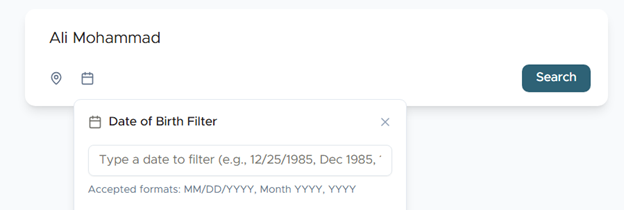
Different scenarios mandate different screening requirements – think about visitors, new hires, contractors etc., and due to common names, the results can be overwhelming. For example, screening Ali Mohammad in the Consolidated List with fuzzy “off”, gives us 29 results, whereas fuzzy “on” yields 344 results.
Shepherd allows the user to enter additional details, such as their birth date, to narrow down the results quickly and decide whether there is a match to the list.
Screening Entities
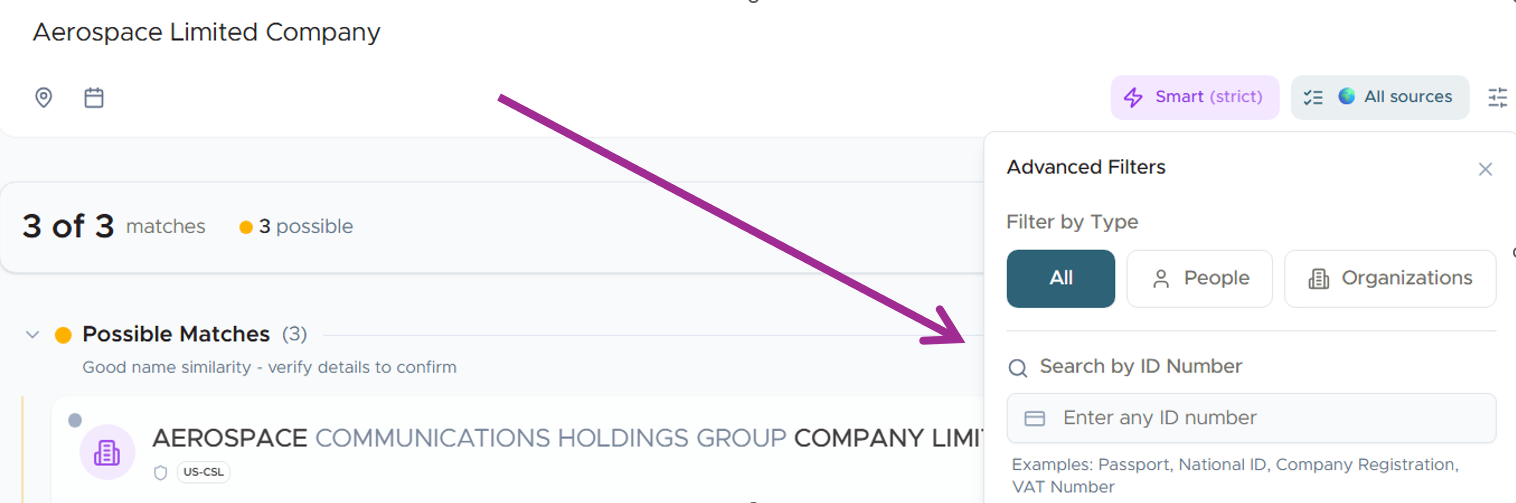
Like the above scenario, screening Aerospace Limited Company with fuzzy “off” presented 2 results, whereas the fuzzy “on” output produced 99 results. Shepherd allows users to input additional details, such as the Business Registratio,n to assist with clearing all the hits.
This means that if companies obtain more up-front information on the entities that they are doing business with, they are not only checking another box on the Know Your Customer list, but they also have additional information to effectively screen.
Screening People & Entities
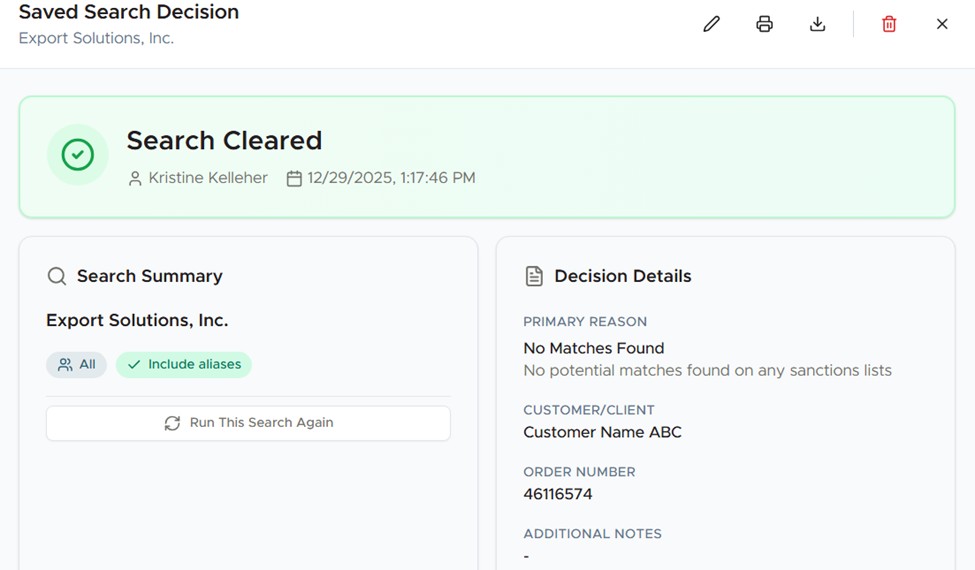
Successful screening requires that it be done at several checkpoints within the export process. This means that screening could be taking place several times over the course of many months. Once your search is saved in Shepherd, it will remind you of when you screened last and what determination you made last time.
This is extremely helpful when multiple employees are screening or if you are manually screening, as it takes you through the thought process of why it was cleared, why it was put on hold, or why it was blocked.

If Shepherd sounds like a tool you would like to try and see if it is a good fit for your organization, please do so by signing up here and trying it risk-free, where you can begin screening in minutes.
And don’t worry, not only is a credit card not required, but if your company determines that Shepherd is the right fit in January, then you change your mind in April – you can cancel at any time.
As always, ESI is always here to assist or help with all your compliance needs. Schedule a no-charge consultation with one of our team members today.
Kristine Kelleher is a Trade Compliance Consultant for Export Solutions -- a full-service consulting firm specializing in U.S. import and export regulations.