

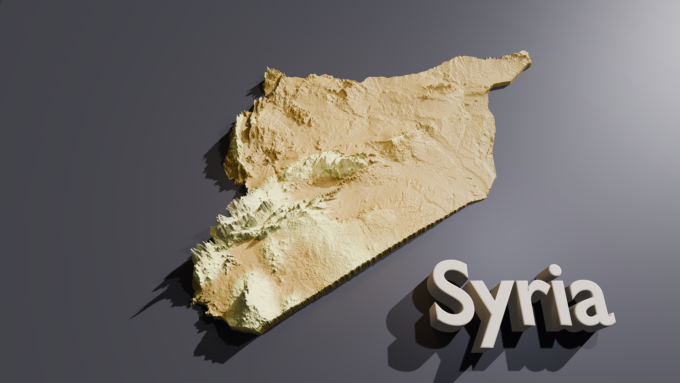
When you hear country names like North Korea, Russia and Syria, you may think bad juju. The United States has long standing opinions on these countries and their leaders, but Syria just received a major upgrade to how the United States views the country.
On August 24, 2026, the Secretary of State rescinded Syria’s State Sponsor of Terrorism (SST) designation. You might be thinking, but what does that actually mean?
Let’s talk about it…
So, What Does “State Sponsor of Terrorism” Actually Mean?
First, “SST” stands for State Sponsor of Terrorism. The United States uses this designation for countries that have repeatedly provided support for international acts of terrorism. Syria has been on this list since 1979, so this is not exactly a new relationship status. We are talking about almost 50 years of being on the list of State Sponsor of Terrorism.
Being designated as an SST comes with some pretty significant consequences, including restrictions related to foreign assistance, defense exports, financial transactions and other areas of U.S. policy. So, removing Syria from the list is kind of a big deal.
But wait. Weren’t Syria sanctions already lifted?
Yes. And this is where sanctions get fun. I know, fun is probably not the first word that comes to mind when you think about sanctions.
In June 2025, President Trump issued an Executive Order revoking the broader U.S. Syria sanctions program, effective July 1, 2025.
OFAC then removed the Syrian Sanctions Regulations from the Code of Federal Regulations. The Caesar Syria Civilian Protection Act was also repealed in December 2025.
On September 2nd, 2025 § 740.5 License Exception Syria Peace and Prosperity (SPP) was issued in a final rule. SPP authorizes the export or reexport of all items subject to the EAR designated EAR99 to Syria. This license exception did not and does not override the end user/end use restrictions in part 744.
So, August 24, 2026 was not the day the United States suddenly went from “nobody touch Syria” to “everyone is welcome.”
That shift had already started.
Instead, the August 24 announcement removed another major layer of restrictions and continued the United States’ move away from broad sanctions against Syria as a country.
The State Department formally rescinded Syria’s SST designation, which means Syria is no longer subject to the prohibitions under the Terrorism List Governments Sanctions Regulations. At the same time, the State Department revoked the designation of Hay’at Tahrir al Sham, or “HTS”, as a Specially Designated Global Terrorist organization. OFAC then removed HTS from the Specially Designated Nationals and Blocked Persons List, or SDN List.
If you’re already lost in the alphabet soup, here is the short version.
The United States is moving away from broad, country based sanctions on Syria and focusing more on specific people, organizations and activities.
Syria Is Not Suddenly a Sanctions-Free-for-All
Read that again, Syria is not suddenly sanctions-free-for-all.
The United States no longer maintains comprehensive sanctions on Syria or blocking sanctions against the Syrian government. However, OFAC still maintains sanctions against specific individuals and groups, including former Syrian President Bashar al Assad and his associates, human rights abusers, Captagon traffickers, people connected to Syria’s past proliferation activities, and ISIS and al Qaida affiliates.
So, no, you cannot just see “Syria” on a transaction and say, “Great! Sanctions are gone!”
Unfortunately, compliance does not work that way. Companies still need to look at who they are doing business with, what they are doing, where the goods or services are going, and whether another sanctions or export control authority applies. This is your due diligence as an exporter.
OFAC has also made clear that U.S. persons may engage in transactions with Syrian financial institutions and the new Syrian government as long as the parties involved are not on the SDN List. Financial institutions are still expected to maintain appropriate, risk based sanctions compliance programs.
So, Why Should Businesses Care?
For years, Syria was essentially a giant “proceed with extreme caution” sign for U.S. businesses. Now, that landscape looks very different.
The removal of the SST designation, combined with the broader sanctions relief that began in 2025, creates more room for financial activity, investment, trade and other legitimate business involving Syria.
That does not mean there are no risks. It means the risks need to be evaluated differently.
And honestly, that is probably the most important part of this whole change.
Sanctions compliance is not just about knowing which countries are “bad.” It is about understanding what restrictions actually apply today.
Because sanctions programs change. Governments change. Designations change. The lists change often. And apparently, sometimes countries get a sanctions glow up.
Syria has now moved another step in that direction.
For businesses, that means opportunity, but it also means homework.
Before jumping into a new Syrian business relationship, companies should still be checking the relevant sanctions lists, reviewing applicable export controls, understanding the parties involved and making sure they know exactly what restrictions remain.
Because while Syria may have gotten a major upgrade, the compliance fine print is still very much alive and well.
And, as always in sanctions compliance, the devil is in the details.
Don’t Set It and Forget It
The Syria sanctions changes are a good reminder that restricted party screening and export due diligence are not things you can just set and forget. The rules and lists change and your customers, suppliers and business partners can change too.
That does not mean your screening process needs to be complicated. Export Solutions offers a free 30-day trial of Shepherd here. Try it today or contact your Export Solutions partner today for a demo.
Michelle Brown is a Trade Compliance Consultant for Export Solutions -- a full-service consulting firm specializing in U.S. import and export regulations.